Klaviyo vs Shopify Messaging: A Technical Comparison for Shopify Merchants
Shopify Email is now Shopify Messaging. Here is how it compares with Klaviyo on segmentation, automation, channels and pricing, and when a Shopify store should move across.
Why this decision has changed in 2026
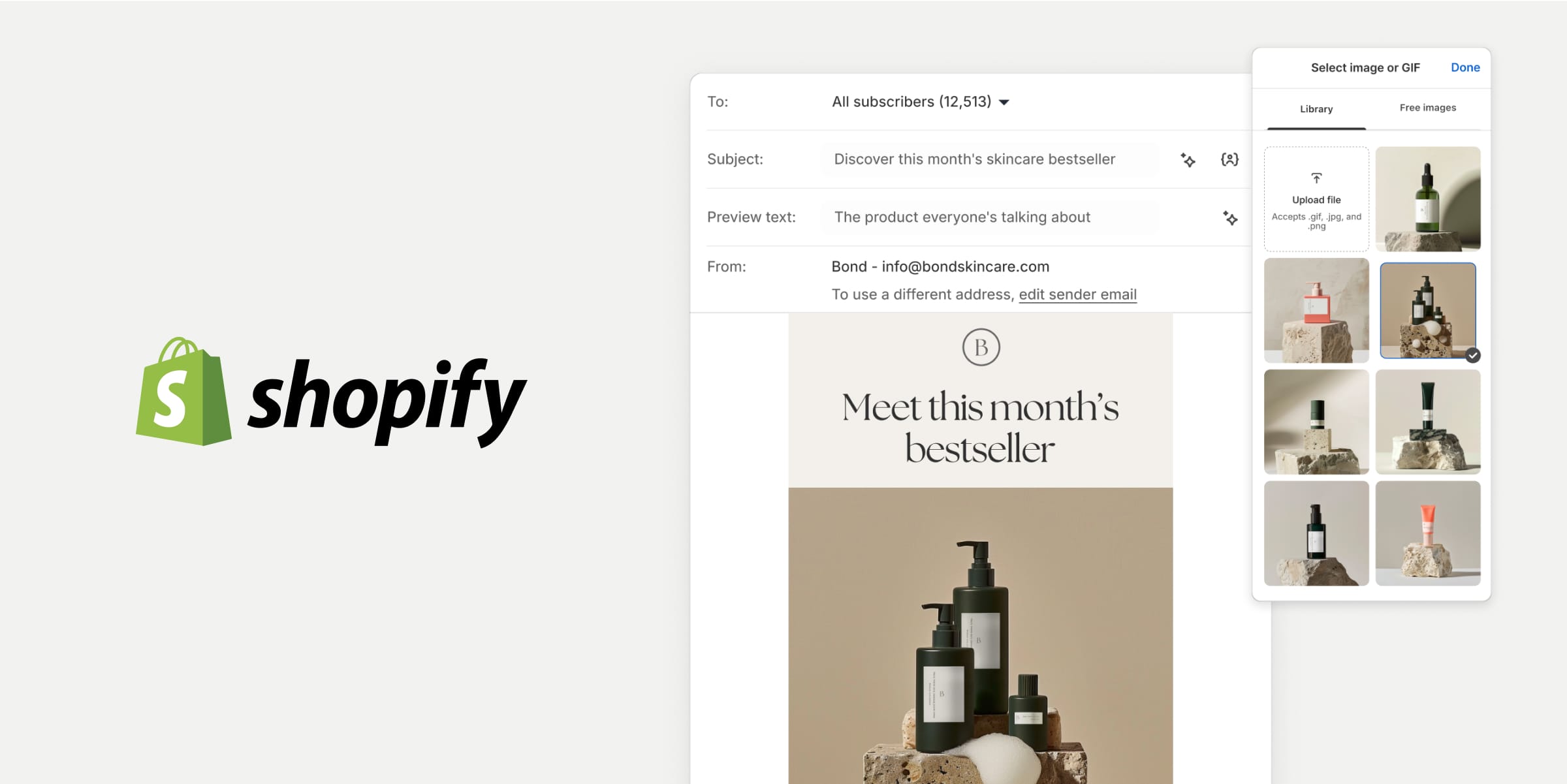
Shopify Email became Shopify Messaging in December 2025, turning it into Shopify’s native messaging platform for email, SMS, and, from June 2026, WhatsApp, all powered directly by Shopify customer data and a generous free tier with prebuilt automations. For Shopify merchants—especially new to mid-size stores, plus brands on Shopify Plus, and teams comparing Shopify Messaging with Klaviyo—that shift changed the decision from “can it send campaigns?” to “how much segmentation depth, automation control, and channel flexibility do we need?”
This comparison focuses on the parts that actually drive that decision: architecture, segmentation, automation, channels, pricing, transactional messaging, B2B use, and where each platform fits strategically as your store grows. Klaviyo moved to active-profile billing, made its AI marketing agent Composer available to every customer in October 2026, and launched Klaviyo in Shopify in November. The gap between the two is now about data depth and control, not whether you can send a decent newsletter—an important distinction if you want stronger retention without overbuying software in 2026 and beyond. Prices are the vendors’ published USD list prices as of October–November 2026, with euro equivalents at about €0.86 per dollar; both vendors bill in USD.
The short version
| Dimension | Shopify Messaging | Klaviyo |
|---|---|---|
| Architecture | Native app reading Shopify data directly | Separate platform with two-way Shopify sync and 350+ integrations |
| Segmentation | Shopify customer and order data | Events with time windows, custom properties, predictive CLV and churn |
| Automation | Prebuilt templates; custom logic in Shopify Flow | Flow builder with splits, in-flow A/B tests and cross-channel steps |
| Channels | Email, SMS (select countries), WhatsApp | Email, SMS, MMS, RCS, WhatsApp, push |
| Pricing | 10,000 free emails a month, then from $1 (€0.86) per 1,000 | From $20 (€17) a month at 500 active profiles |
| Best fit | New to mid-size stores with standard lifecycle needs | Brands where retention is a core growth lever |
Free plan to a point
Shopify Messaging has the most generous free tier in Shopify email marketing, which is why many brands can and should start on it. But free covers sending volume, not capability.
| Free offer | Shopify Messaging | Klaviyo free plan |
|---|---|---|
| Emails per month | 10,000 | 500 |
| Contacts | No limit; billed per send | 250 active profiles |
| Automations | All prebuilt templates | Full flow builder (Klaviyo in Shopify: 3 flows) |
| SMS | Paid from the first message | $5 (€4.30) of mobile messages a month |
Ten thousand free emails covers 2,500 subscribers mailed four times a month. Klaviyo’s free plan is a trial of the platform; Shopify’s is a working programme. The limits show up elsewhere:
- Segments only see Shopify data. No targeting on browse recency, engagement history or data from review, loyalty and helpdesk apps unless you push it onto the customer as tags or metafields.
- Automations are templates. Custom logic moves to Shopify Flow, with no in-flow A/B tests and mixed journeys split across two apps.
- No predictive analytics, so no predicted CLV, churn risk or next-order date.
- Lighter testing, reporting and deliverability tooling, which starts to cost money once email is a material share of revenue.
- SMS in select countries only, with service paused in some. Irish and EU brands should check before planning around it.
Architecture: customer data, native read versus synced profile
Shopify Messaging reads Shopify’s own records; Klaviyo copies them into its own profile and enriches it, processing an average of 2.5 billion events daily. Almost every other difference follows from that.
Messaging needs no integration, no sync and no second login, but its world is the Shopify customer record. Klaviyo runs a historical sync, then syncs in real time, storing every order line as its own event so you can segment on variant-level history with richer customer data, powered by a database of over 9 billion customer profiles.
One trap: onsite events such as Added to Cart now arrive largely through Shopify’s sandboxed web pixel, where identity comes from Shopify. In a Klaviyo Community thread, these events tracked only for logged-in customers and checkout emails, not pop-up sign-ups; the fix was syncing all Klaviyo profiles back to Shopify. Test this on every build.
Segmentation and marketing automation
Shopify Messaging segments on what a customer is; Klaviyo segments on what they did, when and how often, making personalization the practical difference rather than segmentation depth alone. One Klaviyo segment can combine “viewed outerwear three times in 14 days”, “has not ordered in 14 days” and a predicted CLV threshold, using customer data to tailor messaging to behavior. Predictions need 500 purchasing customers, 180 days of history and some repeat buyers; below that, the gap narrows.
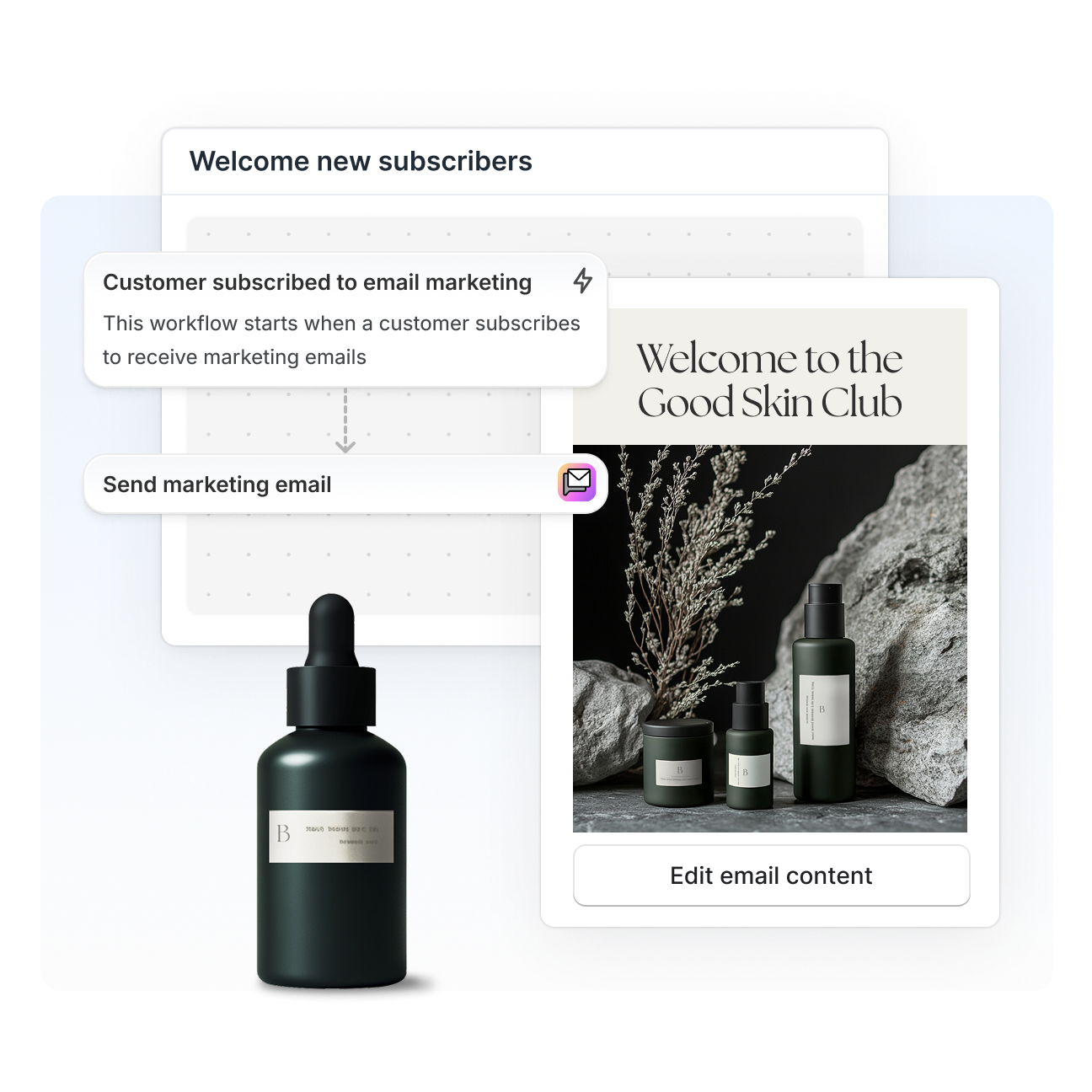
Messaging’s templates cover abandoned checkout, cart and browse, welcome, post-purchase, win-back, birthdays and VIPs. Since March 2026, automations involving other apps live in Shopify Flow. Klaviyo flows trigger on any event, segment or date, branch on profile and event data, and test content, timing and channel in one canvas to better engage customers across touchpoints. More personalized customer engagement through messaging can improve retention and lifetime value. If you switch, turn off Shopify’s abandoned-checkout notification manually, or customers get duplicate reminders.
Channels, sms marketing, AI and deliverability
Klaviyo adds RCS, MMS and push, and has supported SMS for Irish businesses since 2023. SMS and WhatsApp messaging usually see higher open rates than traditional email. Check WhatsApp economics first: Klaviyo’s calculator showed $105 (€90) per 1,000 UK marketing messages. Used well, direct messaging can lift customer satisfaction and trust.
Shopify’s AI is Sidekick, while Klaviyo positions AI agents across its B2C CRM to improve customer experience. Klaviyo’s Composer builds full campaigns, segments included, for your approval, and its predictive models power send timing that a template cannot express. Klaviyo also says its AI agents can autonomously resolve 65% of customer inquiries. Live chat and automated responses can also improve support efficiency.
Deliverability basics are identical: SPF, DKIM, DMARC, one-click unsubscribe and clean lists. Klaviyo adds engagement-based sunsetting, send-time optimisation and inbox-level reporting. Because it bills every emailable profile, a sunset policy improves placement and cuts your bill.
Pricing: per send versus per profile
Shopify charges per email: 10,000 free, then $1 (€0.86) per 1,000, falling to $0.65 (€0.56) after 300,000 and $0.55 (€0.47) after 750,000. Klaviyo charges per active profile, meaning every emailable, non-suppressed contact, with about ten sends per profile included.
Worked examples, email only, at list prices from Klaviyo’s pricing page (24 October 2026) and Shopify’s published tiers:
| Scenario | Monthly emails | Shopify Messaging | Klaviyo (email plan) |
|---|---|---|---|
| 5,000 subscribers, 8 sends per month | 40,000 | $30 (€26) | $100 (€86) |
| 25,000 subscribers, 12 sends per month | 300,000 | $290 (€249) | $400 (€344) |
| 100,000 subscribers, 10 sends per month | 1,000,000 | $720 (€619) | $1,380 (€1,187) |
Shopify is 25–70% cheaper on raw email cost. Klaviyo bills emailable profiles, not just subscribers, and its tiers jump: 10,000 to 13,500 profiles takes the price from $150 (€129) to $325 (€280). Klaviyo also offers enterprise pricing for larger organizations, which may fit a bigger business better than the standard tiers. Klaviyo also reports attributed revenue over its own windows, so never compare it with Shopify’s figures; judge it on incremental margin against a holdout.
Transactional messages and order updates
A complete messaging strategy separates transactional messages from marketing emails. Order updates, shipping updates and delivery alerts are about keeping customers informed, and customers expect timely updates whether or not they opted in to marketing. Well-executed ecommerce emails can also strengthen brand loyalty and the customer experience.
On Shopify, order confirmations, shipping updates and track order links come from Shopify’s built-in notifications rather than Shopify Messaging, and they cost nothing. For many online retailers selling in one market, that is enough. Klaviyo can take over these transactional updates using Shopify events such as Fulfilled Order and Delivered Shipment, so every message shares one brand design and can create additional opportunities to drive sales. Delivery events only sync when your carrier provides them to Shopify. On WhatsApp, Klaviyo prices transactional messages well below marketing ones: $45 (€39) per 1,000 to the UK.
A good rule for SMS marketing is one campaign, one reason to text: a product launches, a follow-up after a first purchase, or a delivery alert. Seasonal campaigns are another effective email strategy when timed to customer demand. Texts that simply repeat your emails train subscribers to opt out.
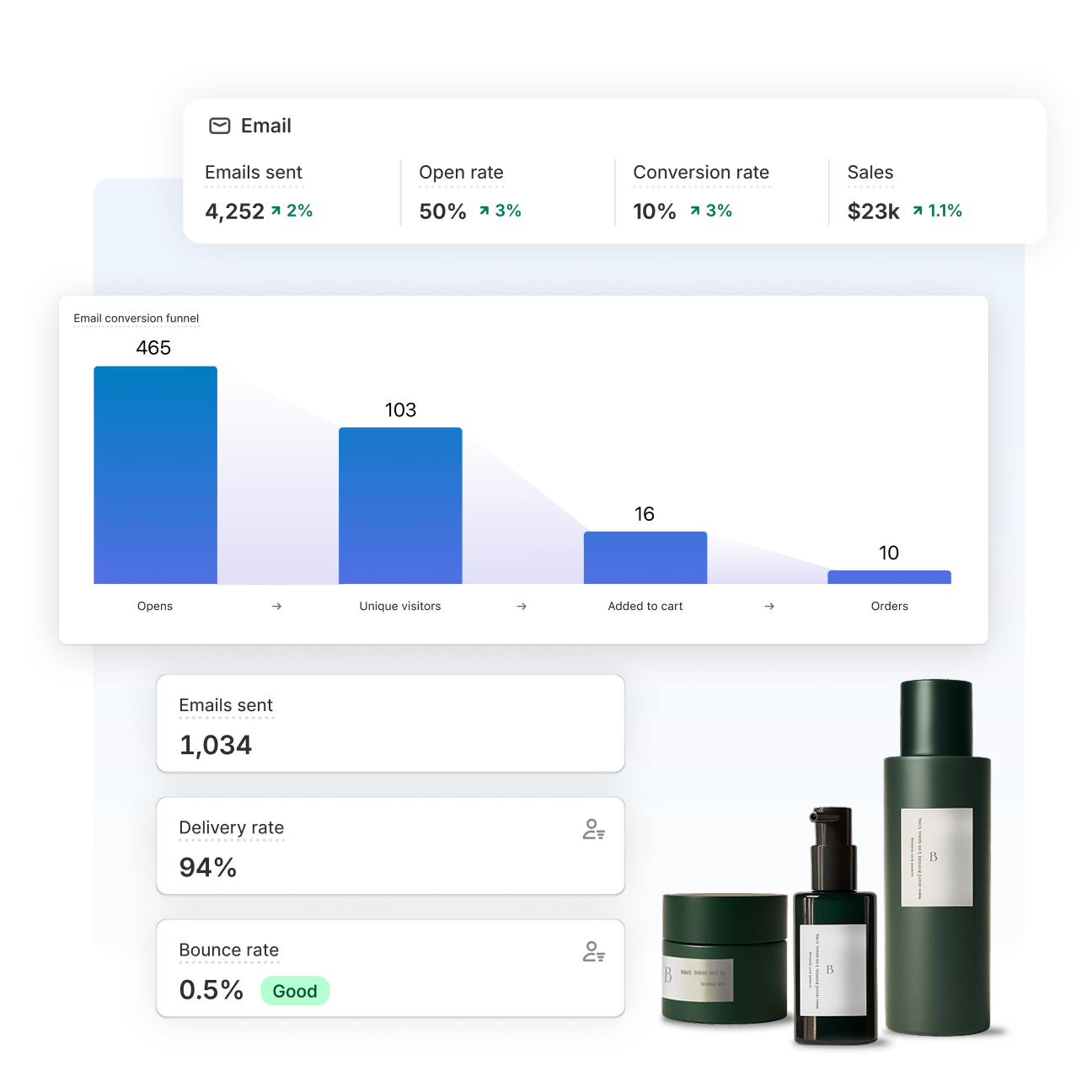
Measure every channel on conversion rates and revenue, not engagement rates alone, because Apple Mail Privacy Protection inflates opens. Popular examples of marketing automation such as browse recovery and replenishment earn their place on conversion, not clicks. Referral programs can also support lifecycle email strategy. And as you expand into new markets, localise transactional templates, consent wording and sender settings for each one before launch.
B2B and Shopify Plus
Both tools work off customers, not Shopify B2B companies. On Messaging, tag trade buyers and segment on the tags. On Klaviyo, carry company, rep and terms across as custom properties, then build reorder flows on each account’s purchase cycle. Klaviyo is Shopify’s recommended Plus partner and added native Shopify Markets support in March 2026, which matters for brands selling across Ireland, the UK and the EU.
How to decide
Start on Shopify Messaging, where pre-built templates automatically pull product images and store branding. Move to Klaviyo when your segments need behaviour or data from other apps, when templates no longer cover your journeys, when you need more advanced features, when you pass the predictive threshold, or when you run several markets or a trade channel. If you migrate: remember that Shopify Messaging keeps subscriber lists and basic metrics in a centralized admin, then set a holdout, verify pixel events, suppress dormant profiles before your first bill, warm a branded sending domain, and switch off matching Shopify automations the same day.
The bottom line
Shopify Messaging is a genuinely good default. Klaviyo earns its higher price only when you use the depth it offers, so map the journeys you want to run and price the platform against the margin they unlock.
At Milk Bottle Labs we have spent years building, auditing and migrating retention stacks for Shopify and Shopify Plus brands across D2C and B2B. If you want a second opinion on whether your store has outgrown Shopify Messaging, or whether your Klaviyo account is earning its keep, get in touch and we will walk through your data with you.